D/D
1. Partial mole: triploidy
2. Twin gest one healthy and other complete mole
3. Placental mesenchymal dysplasia
4. Chorioangioma
Saturday, December 30, 2017
Partial mole withblive foetus

Tuesday, December 26, 2017
Biochemical genetics
GC/MS
Principle:
Separates components in a mixture (by GC) and do molecular analysis by mass spectroscopy (by MS)
mixture will separate into individual substances when heated. The heated gases are carried through a column with an inert gas (such as helium). As the separated substances emerge from the column opening, they flow into the MS. Mass spectrometry identifies compounds by the mass of the analyte molecule. A library of known mass spectra, covering several thousand compounds, is stored on a computer.
Wednesday, October 4, 2017
Foetal medicine
CRL- from 7-14wks , for foetal growth
BPD- from 22 eka onwards
BPD- from 22 eka onwards
+ Perigasric calcification , intra cardiac echo foci...Look for cmv infection
Amniocentesis CMV PCR, QF-PCR for 13,18,21,sex chr
In maternal blood...Cmv igm..igg..Avidity
In maternal blood...Cmv igm..igg..Avidity
Friday, September 29, 2017
General
Human gene consortium
Aim was to provide working template for the human genome
Idea conceived in 1984, implemented in 1990
Funded by department of energy, united state s and national institute of health (NIH)
Budget sanctioned was 3 billion US dollar, and time scale of 15yrs was decided
Funded by department of energy, united state s and national institute of health (NIH)
Budget sanctioned was 3 billion US dollar, and time scale of 15yrs was decided
Apart from US, international consortium is formed by UK, france, australia, japan and china; which participated actively.
Procedure: shotgun approach used; DNA fragments of 1.5 kb formed, amplified by cloning with bacterial vector.
Fragments are sequenced, and put together and assembled in chromosome.
Fragments are sequenced, and put together and assembled in chromosome.
In this way first genome sequenced was chr 22,
In March 2000 draft of human sequence was announced jointly by bill Clinton and british PM Toby Blair. Further improvement of draft announced in 2003.
For evaluation , computational tolls also developed
Monday, September 25, 2017
Ataxia
1.Friedreich's ataxia
Symptoms begin sometime between the ages of 5 to 15 years
Progressive neurological degeneration
symptoms of poor coordination such as gait disturbance, scoliosis, heart disease and diabetes, but does not affect cognitive function
Genetics: gaa expansion in fxn gene
reduced expression of the mitochondrial protein frataxin
Tuesday, August 22, 2017
Growth and development
weight in infancy:
gain in weight is at the rate of 25-30gm per day for first 3mths, thereafter 400gm per month for the rest of the first year.
at 6mths: doubles
at 1yr : triples
at 2yrs: quadruples
at 3yrs: fivetimes
at 5yrs: b wt.X 6
at 7yrs: b wt.X 7
at 10 yrs: b wt.X 10
child gains 2kg every year between 3 to 7yrs, thereafter 3 kg per year till puberty.
Head circumference
34cm at birth
increases at the rate of 2cm per month for first 3months
1cm/mth from 3rd to 6th month
0.5cm/mth from 6th to 12th month.
at the age of 12 yr, head circumference is 52cm.
Development quotient
Development quotient is the ratio of the functional age to the chronological age.
Maximum is 100. Calculated by dividing functional age with chronological age and multiplying by 100.
=/> 85 is normal
71-84 is mild to moderate delay
< /= 70 is severe delay
Maximum is 100. Calculated by dividing functional age with chronological age and multiplying by 100.
=/> 85 is normal
71-84 is mild to moderate delay
< /= 70 is severe delay
Sunday, July 30, 2017
Rett syndrome
Rett syndrome
affects girls exclusive ly
Normal development upto 6-18m
abnormal hand movt(washing, clapping etc.) slow growth, microcephaly, seizures, breathing problems, sleep disturbamces
gentics: IMECP2), X-Linked dominant, so males die in utero
affects girls exclusive ly
Normal development upto 6-18m
abnormal hand movt(washing, clapping etc.) slow growth, microcephaly, seizures, breathing problems, sleep disturbamces
gentics: IMECP2), X-Linked dominant, so males die in utero
case 161022 Spinocerebellar Ataxia type 1
features: 1. cerebellar ataxia
2. bulbar function deterioration: Dysarthria
2. bulbar function deterioration: Dysarthria
Saturday, July 29, 2017
Unexplained fractures in infancy:
The two most frequently recognised underlying disease processes causing bone fragility in infancy are metabolic bone disease of prematurity7 and osteogenesis imperfecta
Molecular genetics
Designing of PCR primers
They should be complementary to the template region of DNA. At least 3' end should match, complementarity should be less than 3
General complementarity should be less than 6
Ideal state is 0 complementarity in any way
structure of the primer should be simple and should not contain internal secondary structure to avoid internal folding.
primer-primer annealing which creates primer dimers and disrupts the amplification process, should be avoided
Primers should generally have the following properties:
Length of 18-24 bases
40-60% G/C content
Start and end with 1-2 G/C
pairsMelting temperature (Tm) of 50-60°C
Primer pairs should have a Tm within 5°C of each other
40-60% G/C content
Start and end with 1-2 G/C
pairsMelting temperature (Tm) of 50-60°C
Primer pairs should have a Tm within 5°C of each other
Primer pairs should not have complementary regions
PCR Primer Design Guidelines
PCR (Polymerase Chain Reaction)
Polymerase Chain Reaction is widely held as one of the most important inventions of the 20th century in molecular biology. Small amounts of the genetic material can now be amplified to be able to a identify, manipulate DNA, detect infectious organisms, including the viruses that cause AIDS, hepatitis, tuberculosis, detect genetic variations, including mutations, in human genes and numerous other tasks.
PCR involves the following three steps: Denaturation, Annealing and Extension. First, the genetic material is denatured, converting the double stranded DNA molecules to single strands. The primers are then annealed to the complementary regions of the single stranded molecules. In the third step, they are extended by the action of the DNA polymerase. All these steps are temperature sensitive and the common choice of temperatures is 94oC, 60oC and 70oC respectively. Good primer design is essential for successful reactions. The important design considerations described below are a key to specific amplification with high yield. The preferred values indicated are built into all our products by default.
1. Primer Length: It is generally accepted that the optimal length of PCR primers is 18-22 bp. This length is long enough for adequate specificity and short enough for primers to bind easily to the template at the annealing temperature.
2. Primer Melting Temperature: Primer Melting Temperature (Tm) by definition is the temperature at which one half of the DNA duplex will dissociate to become single stranded and indicates the duplex stability. Primers with melting temperatures in the range of 52-58 oC generally produce the best results. Primers with melting temperatures above 65oC have a tendency for secondary annealing. The GC content of the sequence gives a fair indication of the primer Tm. All our products calculate it using the nearest neighbor thermodynamic theory, accepted as a much superior method for estimating it, which is considered the most recent and best available.
Formula for primer Tm calculation:
Melting Temperature Tm(K)={ΔH/ ΔS + R ln(C)}, Or Melting Temperature Tm(oC) = {ΔH/ ΔS + R ln(C)} - 273.15 where
ΔH (kcal/mole) : H is the Enthalpy. Enthalpy is the amount of heat energy possessed by substances. ΔH is the change in Enthalpy. In the above formula the ΔH is obtained by adding up all the di-nucleotide pairs enthalpy values of each nearest neighbor base pair.
ΔS (kcal/mole) : S is the amount of disorder a system exhibits is called entropy. ΔS is change in Entropy. Here it is obtained by adding up all the di-nucleotide pairs entropy values of each nearest neighbor base pair. An additional salt correction is added as the Nearest Neighbor parameters were obtained from DNA melting studies conducted in 1M Na+ buffer and this is the default condition used for all calculations.
ΔS (salt correction) = ΔS (1M NaCl )+ 0.368 x N x ln([Na+])
Where
N is the number of nucleotide pairs in the primer ( primer length -1).
[Na+] is salt equivalent in mM.
N is the number of nucleotide pairs in the primer ( primer length -1).
[Na+] is salt equivalent in mM.
[Na+] calculation:
[Na+] = Monovalent ion concentration +4 x free Mg2+.
3. Primer Annealing Temperature: The primer melting temperature is the estimate of the DNA-DNA hybrid stability and critical in determining the annealing temperature. Too high Ta will produce insufficient primer-template hybridization resulting in low PCR product yield. Too low Ta may possibly lead to non-specific products caused by a high number of base pair mismatches,. Mismatch tolerance is found to have the strongest influence on PCR specificity.
Ta = 0.3 x Tm(primer) + 0.7 Tm(product) – 14.9
where,
Tm(primer) = Melting Temperature of the primers
Tm(product) = Melting temperature of the product
4. GC Content: The GC content (the number of G's and C's in the primer as a percentage of the total bases) of primer should be 40-60%.
5. GC Clamp: The presence of G or C bases within the last five bases from the 3' end of primers (GC clamp) helps promote specific binding at the 3' end due to the stronger bonding of G and C bases. More than 3 G's or C's should be avoided in the last 5 bases at the 3' end of the primer.
6. Primer Secondary Structures: Presence of the primer secondary structures produced by intermolecular or intramolecular interactions can lead to poor or no yield of the product. They adversely affect primer template annealing and thus the amplification. They greatly reduce the availability of primers to the reaction.
i) Hairpins: It is formed by intramolecular interaction within the primer and should be avoided. Optimally a 3' end hairpin with a ΔG of -2 kcal/mol and an internal hairpin with a ΔG of -3 kcal/mol is tolerated generally.
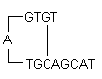
ΔG definition: The Gibbs Free Energy G is the measure of the amount of work that can be extracted from a process operating at a constant pressure. It is the measure of the spontaneity of the reaction. The stability of hairpin is commonly represented by its ΔG value, the energy required to break the secondary structure. Larger negative value for ΔG indicates stable, undesirable hairpins. Presence of hairpins at the 3' end most adversely affects the reaction.
ΔG = ΔH – TΔS
ii) Self Dimer: A primer self-dimer is formed by intermolecular interactions between the two (same sense) primers, where the primer is homologous to itself. Generally a large amount of primers are used in PCR compared to the amount of target gene. When primers form intermolecular dimers much more readily than hybridizing to target DNA, they reduce the product yield. Optimally a 3' end self dimer with a ΔG of -5 kcal/mol and an internal self dimer with a ΔG of -6 kcal/mol is tolerated generally.
iii) Cross Dimer: Primer cross dimers are formed by intermolecular interaction between sense and antisense primers, where they are homologous. Optimally a 3' end cross dimer with a ΔG of -5 kcal/mol and an internal cross dimer with a ΔG of -6 kcal/mol is tolerated generally.
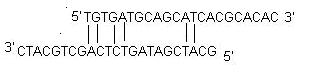
7. Repeats: A repeat is a di-nucleotide occurring many times consecutively and should be avoided because they can misprime. For example: ATATATAT. A maximum number of di-nucleotide repeats acceptable in an oligo is 4 di-nucleotides.
8. Runs: Primers with long runs of a single base should generally be avoided as they can misprime. For example, AGCGGGGGATGGGG has runs of base 'G' of value 5 and 4. A maximum number of runs accepted is 4bp.
9. 3' End Stability: It is the maximum ΔG value of the five bases from the 3' end. An unstable 3' end (less negative ΔG) will result in less false priming.
10. Avoid Template Secondary Structure: A single stranded Nucleic acid sequences is highly unstable and fold into conformations (secondary structures). The stability of these template secondary structures depends largely on their free energy and melting temperatures(Tm). Consideration of template secondary structures is important in designing primers, especially in qPCR. If primers are designed on a secondary structures which is stable even above the annealing temperatures, the primers are unable to bind to the template and the yield of PCR product is significantly affected. Hence, it is important to design primers in the regions of the templates that do not form stable secondary structures during the PCR reaction. Our products determine the secondary structures of the template and design primers avoiding them.
11. Avoid Cross Homology: To improve specificity of the primers it is necessary to avoid regions of homology. Primers designed for a sequence must not amplify other genes in the mixture. Commonly, primers are designed and then BLASTed to test the specificity. Our products offer a better alternative. You can avoid regions of cross homology while designing primers. You can BLAST the templates against the appropriate non-redundant database and the software will interpret the results. It will identify regions significant cross homologies in each template and avoid them during primer search.
Parameters for Primer Pair Design
1. Amplicon Length: The amplicon length is dictated by the experimental goals. For qPCR, the target length is closer to 100 bp and for standard PCR, it is near 500 bp. If you know the positions of each primer with respect to the template, the product is calculated as: Product length = (Position of antisense primer-Position of sense primer) + 1.
2. Product Position: Primer can be located near the 5' end, the 3' end or any where within specified length. Generally, the sequence close to the 3' end is known with greater confidence and hence preferred most frequently.
3. Tm of Product: Melting Temperature (Tm) is the temperature at which one half of the DNA duplex will dissociate and become single stranded. The stability of the primer-template DNA duplex can be measured by the melting temperature (Tm).
4. Optimum Annealing Temperature (TaOpt): The formula of Rychlik is most respected. Our products use this formula to calculate it and thousands of our customers have reported good results using it for the annealing step of the PCR cycle. It usually results in good PCR product yield with minimum false product production.
Ta Opt = 0.3 x(Tm of primer) + 0.7 x(Tm of product) - 14.9
where
Tm of primer is the melting temperature of the less stable primer-template pair
Tm of product is the melting temperature of the PCR product.
Tm of primer is the melting temperature of the less stable primer-template pair
Tm of product is the melting temperature of the PCR product.
5. Primer Pair Tm Mismatch Calculation:The two primers of a primer pair should have closely matched melting temperatures for maximizing PCR product yield. The difference of 5oC or more can lead no amplification.
Primer Design using Software
A number of primer design tools are available that can assist in PCR primer design for new and experienced users alike. These tools may reduce the cost and time involved in experimentation by lowering the chances of failed experimentation.
Primer Premier follows all the guidelines specified for PCR primer design. Primer Premier can be used to design primers for single templates, alignments, degenerate primer design, restriction enzyme analysis. contig analysis and design of sequencing primers.
The guidelines for qPCR primer design vary slightly. Software such as AlleleID and Beacon Designer can design primers and oligonucleotide probes for complex detection assays such as multiplex assays, cross species primer design, species specific primer design and primer design to reduce the cost of experimentation.
PrimerPlex is a software that can design primers for Multiplex PCR and multiplex SNP genotyping assays.
Multiplex polymerase chain reaction(Multiplex PCR)
first described in 1988 as a method to detect deletions in the dystrophingene
first described in 1988 as a method to detect deletions in the dystrophingene
amplify several different DNA sequences simultaneously (as if performing many separate PCR reactions all together in one reaction).
Multiplex-PCR consists of multiple primer sets within a single PCR mixture to produce amplicons of varying sizes that are specific to different DNA sequences
Multiplex-PCR consists of multiple primer sets within a single PCR mixture to produce amplicons of varying sizes that are specific to different DNA sequences
primers pairs are optimized so that all primer pairs can work at the same annealing temperature during PCR. And
amplicon sizes, i.e., their base pair length, should be different enough to form distinct bands when visualized by gel electrophoresis. If amplicon size are same, primers are dyyed with different colour fluorescent dyes
amplicon sizes, i.e., their base pair length, should be different enough to form distinct bands when visualized by gel electrophoresis. If amplicon size are same, primers are dyyed with different colour fluorescent dyes
Types of Multiplex PCR
1. Single template PCR reactions
2. Multiple template PCR reactions
1. Single template PCR reactions
2. Multiple template PCR reactions
Application multiplex PCR :
1. Pathogen identification
2. SNP genotype
3. Gene Deletion Analysis
4. Mutation analysis
5. Linkage analysis
6. Forensic studies
1. Pathogen identification
2. SNP genotype
3. Gene Deletion Analysis
4. Mutation analysis
5. Linkage analysis
6. Forensic studies
Software for Multiplex PCR Primer design
Visual OMP
Primer plex
Visual OMP
Primer plex
Multiplex in much use now, since MLPA is a better tech...For dystrophin gene del ..Now MLPA is used
Analysis on cross pro
1. Two peaks= hetro mutation
2. Two peaks with frame shift= insertion, deletion of one or two bp
3. Homozygous substitution....Can not be seen in chromas
+ PCR for G6PD deficiency at lab:
three common variant are tested: G6PD Mediterranean, G6PD orissa, G6PD kerala...With use of haitri enzyme digest product is digested and run on page
+ ARMS PCR: for thal
Done for common mutations,
4 mutant allell specific primers (3 end only) are used along with three common primers which are added in every reaction , they are 1, 14,15
14 and 15 are control primer which amplify the 3rd exon Beta gene which carry 619 bp del
1 is a "5 end" primer which is required as forward primer with "3 end" mutant primers
After PCR amplification product is run on gel and compared with positive control, which are also run along with patient samples.
Every reaction gives one control band of 14_15 which is close to black terminal of gel, this is of amplified 3rd exon Beta gene
In 619 bp deletion, this control band is towards red terminal since it is short in size
Notez
---Glutaric Acid uria:
Large head, fever, dystonic movt ---glutaric acid uria
Sympt appear during ac illness
Mri..basal ganglia involved, bat wing appearance
Treatment....carnitine
Sympt appear during ac illness
Mri..basal ganglia involved, bat wing appearance
Treatment....carnitine
Neuropathy where axonal muscles are not involved: CMT
pleiotropy: single gene may cause multiple phenotypic expressions
+Criteria for muscular dystrophy:
primary myopathy
Genetic bases
Progressive
Degeneration and death of muscle fiber
+Self injury inflicting
1. Smith mengnis syndrome
2.lysh nyhan
3.PKU
4.tyrocenemia type3
+ D/d Marfan syndrome
Homocysteinuria
+ Double malleolus seen in Ricketts
+ Depressed nasal bridge and prominent eyes and split distal phalak seen in Robinow syndrome
+Advanced paternal age is defined as age of father more than 40yrs, it increases the risk of genetic abnormalities by 0.5 to 1%
+Foetal microarray testing adds to 10% more of information as we get from karyotype
+With consanguinity, the risk of genetic disorders is increased by 1.5% over the general population risk
+In general population the carrier risk of SMA is 1in50
+Thallessmia carriership in sindhis is 5%
+15% risk of so an in every preg
+ Early IUD with hydrops cause may be Turner syndrome
+Corneal clouding in MPS: seen in 1,3,4
Not seen in 2
Mps1...all typical phenotype ( course face, corneal clouding, hirsuitism, joint contracture, protruding belly, hsm)
Mps2...no corneal clouding, x linked
Mps3... behaviour problems
Mps4 ...skeletal. Amomalies, short stature, hsm, no jt contracture infact lax jt.
+ Adult onset tremoulsness.....Rule out SMA first
+Human genome is 3billion bp, out of which only 1% contain genes.
+ Region in gene of longer than 500kb with no ORF are k/a desserts. 20% of human genome contains deserts.
+Human genome contains sequence that do not have coding function but still conserved through out species, this evolutionary conservation is certainly higher than the background level, which mandate them to be important.
+Repeated sequence accounts for more than 50% of genome, 45%of which are transposon
+Transposons are the sequence in genome that are mobile that is they are able to transport themselves to other region in genome.
Significance: while moving themselves transposons can transfer other gene sequence with them, hence are major source of mutation. In genome.
+ Most of the mutation in hbb are in 100 to 400
One common polymorphism is seen in almost all samples of hbb k/a cat polymorphism
+Status rica
For discrete or qualitative variable do chi square test
For continue us or quantitative variable do student t test
To address association in two variable do odd ratio
Linkage disequilibrium
Hardy Weinberg law
+ATRX gene...Alpha thal and x linked mental retardation, wile somatic mutation of ATRX cause myelodysplasia syndrome (MDS)
+ Stickler syndrome: flat face, mid face hypoplasia, prominent eyes, 50% have Pierre robin's sequence, spondylosis epiphyseal dysplasia is common
Do not have intellectual disability
May have arthropathy or joint pain
+ Tuberous sclerosis treatment: everolimus (a rapalog) is currently approved by the FDA (U.S. Food and Drug Administration) and EMA (European Medicines Agency) for tumours associated with tuberous sclerosis complex (renal angiomyolipoma and subependymal giant cell astrocytoma), the use of these drugs for treating other symptoms of the condition has yet to be established.
+ Patient with tuberous sclerosis, may present with autistic behaviour similar to fragile x syndrome.....So always look for tuberous signs in such cased
Dd blue sclera: osteogenesis. Imperfecta, silver Russel syndrome, pyknodysostodos,
+Situs inversus, important cause is primary colliery dyskinesia
+APP7A ..... Menkes dis
ATP7B. ...... William dis
+Hot spot for DMD....Exon 5-11 and 44- 61
+ Lyso GB1, is a specific market for Gaucher disease
+ Recurrence risk cleft palate..5%
+ In sulfite oxidase def like molybdenum co A Def..... progression is rapid, usually normal at birth but within 1mth may become severe with severe cerebral atrophy, microcephaly...normal HC at birth
+ Asuragen kit for fragile X syn
+syndrome of Cong diaphragm hernia*
Simpson-Golabi-Behmel syndrome, Denys-Drash syndrome, spondylocostal dysostosis, craniofrontonasal syndrome, Cornelia de Lange syndrome and Marfan syndrome
+ Primary microcephaly: most common gene ASPM gene
+ Galactokinase Def cause only congenital cataract, chances of getting other symptoms of galactosemia are less, treatment in this is debatable including strict diet restrictions
Classical galatossemia is Galt Def, more common, strict diet restrictions advised
+ASS, ASL, arginase enzymes from Urea cycle can be seen in CBS sample
+ Software for Agilent...cytogenomics
For Affymetrix....Chas
+ Subtelomeric MLPA probes serves the same purpose as FISH probes but are cheaper hence preferred
+Low PAPP-A...less than 0.5...associated with Iugr (specially if less than 0.25), preterm, pregnancy loss before 20 wks and pre eclampsia.
+ Protein structuring software....raptor x, pymol.org, si mol
+Normal female with b/l inguinal hernia....think of male with 5alpha reductase def
+ If mother not carrier of deletion.....chances of recurrence is 8 per in subsequent pregnancy
,,+Close dd for mitochondrial encephlo is acute necrotizing encephlopathy
For mito...big50 given
+ MELAS MRI: multiple demelinating patches, on repeating after few month they disappear and reappear in other are
+ Acroparasthsiae in fabry treated by Carbamazipi
+Vertical supranuclear vmgaze palsy....initially can not look down than up then horizontal saccad then vertical saccda so in the end of NPC absent eye movt
Soliris...treatment for pnh
Ciniryza
Monday, May 29, 2017
compound hetrozygous
Definition: The presence of two different mutant alleles at a particular gene locus, one on each chromosome of a pair. (A mutation affecting only one allele is called heterozygous)
simple rule of thumb: in non-consanguineous parents , the most likely explanation for a recessive disease in offspring is compound heterozygosity for two different pathogenic mutations. Exceptions from this rule of thumb may be founder mutations in certain populations and specific gain of function mutations in certain genes such as e.g. FGFR2.
simple rule of thumb: in non-consanguineous parents , the most likely explanation for a recessive disease in offspring is compound heterozygosity for two different pathogenic mutations. Exceptions from this rule of thumb may be founder mutations in certain populations and specific gain of function mutations in certain genes such as e.g. FGFR2.
Tuesday, April 11, 2017
still birth
Sudden Intrauterine foetal death
By defination Intrauterine foetal death (Stillbirth) is any foetal loss at 20 or more weeks of gestation.
Risk factors:
Maternal Thrombophillias:
a) Antiphospholipid antibody syndrome: characterised by presence of antiphospholipid antibodies, thrombosis and obstetrical complications, exact cause is uncertain but placental infalammation, thrombosis and decidual vasculopathy maay be involved.
b)Heritable Thrombophilias: that involves deficiency of anticoagulant protein or an increase in procoagulent protein. commonly associated with factor V Leiden mutation (FVL), prothrombin gene mutation, deficiency of anticoagulent proteins that are Protein C, S and Antithrombin III. various studies have shown poor associatin with stllbirth hence routine throm bophillia testing after stillbirth is not recommended.
thrombophillic defects may play a significant role in pacental abruption or infarction.
Infection: CMV is the most common congenirtally acquired infection during pregnancy.It can cause foetal and placental damage but its role in stillbirth is not clear.
infections with proven role are:
Bacterial pathogens: E. Colli, Group B Streptococci, Ureaplasm Urealyticum, Mycoplasm Hominis, Bacteroides species, Gardnerella, Mobilincus species and various enterococci.syphillis,
viral infections like Parvovirus B19 and enterovirus group.
Spirochetal disease: Syphillis, leptospirosis and lyme disease.
Foetal factors:
1. red cell alloimmunization:anti RhD, Anti Rhc and anti kell are most important in this respect.
2. platelet alloimmunization: result of maternal alloimmunization against fetal platelet antigens inherited from father.severe alloimmunization can cause intracranial hemorrhage and death.
3.chromosomal abnormality: overall fetal cytogenetic sbnormalities accounts for 6% to 10% of foetal loss, proportion is higher in malformed or macerated fetus.The distribution of chromosomal abnormality associated with stillbirths are as follows: trisomy21 31%, Monosomy X 22%, Trisomy18-22%, Trisomy 13- 6%and other chromosomal anomalies-19%
4. fetal single gene and mendelian disorders may also result in stillborn.common associations are:
Inborn errors of metabolism: Smith-Lemli-optiz Syndrome, Glycogen storage disease, peroxismal disorders and amino acid disorders
X-linked dominant mutations: lethal in male fetus due to skewed X-inactivation
autosomal dominent disorders: long QT interval, skeletal dysplasia
5. fetal structural anomalies: 25% of still
maternal : age less than 15 and more than 35 years, lowest risk is between 30-34 years, Obesity, gestational diabetes, hypertension, smoking, alcohol use, illicit drug use, Hypothyroidism, presence of TPO antibodies, Systemic Lupus arythromatosis, Intrahepatic chelestasis of pregnancy, inadequate prenatal care,
Obsterical profile: previous history of still birth or recurrent pregnancy loss,
Foetal factors: multiple gestation, IUGR
demographic factors: race and ethnicity
Causes:
By defination Intrauterine foetal death (Stillbirth) is any foetal loss at 20 or more weeks of gestation.
Risk factors:
Maternal Thrombophillias:
a) Antiphospholipid antibody syndrome: characterised by presence of antiphospholipid antibodies, thrombosis and obstetrical complications, exact cause is uncertain but placental infalammation, thrombosis and decidual vasculopathy maay be involved.
b)Heritable Thrombophilias: that involves deficiency of anticoagulant protein or an increase in procoagulent protein. commonly associated with factor V Leiden mutation (FVL), prothrombin gene mutation, deficiency of anticoagulent proteins that are Protein C, S and Antithrombin III. various studies have shown poor associatin with stllbirth hence routine throm bophillia testing after stillbirth is not recommended.
thrombophillic defects may play a significant role in pacental abruption or infarction.
Infection: CMV is the most common congenirtally acquired infection during pregnancy.It can cause foetal and placental damage but its role in stillbirth is not clear.
infections with proven role are:
Bacterial pathogens: E. Colli, Group B Streptococci, Ureaplasm Urealyticum, Mycoplasm Hominis, Bacteroides species, Gardnerella, Mobilincus species and various enterococci.syphillis,
viral infections like Parvovirus B19 and enterovirus group.
Spirochetal disease: Syphillis, leptospirosis and lyme disease.
Foetal factors:
1. red cell alloimmunization:anti RhD, Anti Rhc and anti kell are most important in this respect.
2. platelet alloimmunization: result of maternal alloimmunization against fetal platelet antigens inherited from father.severe alloimmunization can cause intracranial hemorrhage and death.
3.chromosomal abnormality: overall fetal cytogenetic sbnormalities accounts for 6% to 10% of foetal loss, proportion is higher in malformed or macerated fetus.The distribution of chromosomal abnormality associated with stillbirths are as follows: trisomy21 31%, Monosomy X 22%, Trisomy18-22%, Trisomy 13- 6%and other chromosomal anomalies-19%
4. fetal single gene and mendelian disorders may also result in stillborn.common associations are:
Inborn errors of metabolism: Smith-Lemli-optiz Syndrome, Glycogen storage disease, peroxismal disorders and amino acid disorders
X-linked dominant mutations: lethal in male fetus due to skewed X-inactivation
autosomal dominent disorders: long QT interval, skeletal dysplasia
5. fetal structural anomalies: 25% of still
maternal : age less than 15 and more than 35 years, lowest risk is between 30-34 years, Obesity, gestational diabetes, hypertension, smoking, alcohol use, illicit drug use, Hypothyroidism, presence of TPO antibodies, Systemic Lupus arythromatosis, Intrahepatic chelestasis of pregnancy, inadequate prenatal care,
Obsterical profile: previous history of still birth or recurrent pregnancy loss,
Foetal factors: multiple gestation, IUGR
demographic factors: race and ethnicity
Causes:
Monday, March 27, 2017
QT interval
The QT interval is the time from the start of the Q wave to the end of the T wave.It represents the time taken for ventricular depolarisation and repolarisation.
QT shortens at faster heart rates
prolonged QT is associated with an increased risk of ventricular arrhythmias
MEASUREMENTS:
measured in either lead II or V5-6
Large U waves (> 1mm) that are fused to the T wave should be included
Large U waves (> 1mm) that are fused to the T wave should be included
Smaller U waves and those that are separate from the T wave should be excluded
The maximum slope intercept method is used to define the end of the T wave
Corrected QT
estimates the QT interval at a heart rate of 60 bpm.
improves detection of patients at increased risk of arrhythmias.
improves detection of patients at increased risk of arrhythmias.
Bazett’s formula: QTC = QT / √ RR
QTcis prolonged if > 440ms in men or > 460ms in women
prolonged QTc
Hypokalemia, hypocalcemia, hypomagnesemia, hypothermia, myocardial infarction, congenital long QT, drugs, raised ict
SHORT QT INTERVAL
Hypercalcemia, congenital short QT , digoxin effect
Wednesday, March 22, 2017
D/D
Axial hypotonia with limb hypertonia: organic aciduria
d/d IMPRINTING DISORDERS:
1. Prader–Willi syndrome
2.Angelman syndrome
3.Beckwith–Wiedemann syndrome
4.Silver Russell syndrome
5. Cancers
6. Autism
7. Pseudohypoparathyroidism type 1
8. Maternal & paternal UPD syndromes
9.Transient Neonatal diabetes mellitus •
d/d DIGENIC INHERITANCE:
1.Waardenberg syn: mutation in MITF and TYR genes
2. Nonsyndromic hearing loss: enlarged vestibular aqueduct & Pendred syndrome SLC26A4 and KCNJ10 genes
also mutation in Cx 26, 30 , 31
3.Retinitis pigmentosa
d/d MACROCEPHALY
1. Hurler syndrome
2. MLC
3. Cardio-facio-cutaneous syndrome
d/d FLOPPY INFANT
1. Down syndrome
2. Zellweger syndrome, look like down syndrome
3. Prader Willi synd: feeding problem
4. Congenital myotonic dystrophy: extremely floppy, need ventilatory support at birth
D/D Rhizomelic shortening of bones
1. Hurler syndrome
2. MLC
3. Cardio-facio-cutaneous syndrome
d/d FLOPPY INFANT
1. Down syndrome
2. Zellweger syndrome, look like down syndrome
3. Prader Willi synd: feeding problem
4. Congenital myotonic dystrophy: extremely floppy, need ventilatory support at birth
D/D Rhizomelic shortening of bones
Tuesday, February 28, 2017
The telomere syndromes
Telomeres are DNA–protein structures that protect chromosome ends from degradation and
fusion
cancer, was the first human disease in which telomeres were thought tohave a role. Telomerase activity was found to be upregulated in most cancers7
lung disease
premature-ageing syndromes
childhood onset:
Dyskeratosis congenita syndrome: dyskeratosis congenita 1 (DKC1) gene, encodes a conserved protein called dyskerin, it was as an essential component of the telomerase enzyme. skin hyperpigmentation, oral leukoplakia and nail dystrophy
Hoyeraal–Hreidarsson syndrome is characterized by developmental delay, immunodeficiency and cerebellar
hypoplasia.
Revesz syndrome is characterized by bilateral exudative retinopathy
Adult-onset manifestations of telomere-mediated disease:
more common due to germline TERT or TR loss-of-function mutations. Example: idiopathic pulmonary fibrosis (IPF). most common manifestation of telomere-mediated disease
fusion
cancer, was the first human disease in which telomeres were thought tohave a role. Telomerase activity was found to be upregulated in most cancers7
lung disease
premature-ageing syndromes
childhood onset:
Dyskeratosis congenita syndrome: dyskeratosis congenita 1 (DKC1) gene, encodes a conserved protein called dyskerin, it was as an essential component of the telomerase enzyme. skin hyperpigmentation, oral leukoplakia and nail dystrophy
Hoyeraal–Hreidarsson syndrome is characterized by developmental delay, immunodeficiency and cerebellar
hypoplasia.
Revesz syndrome is characterized by bilateral exudative retinopathy
Adult-onset manifestations of telomere-mediated disease:
more common due to germline TERT or TR loss-of-function mutations. Example: idiopathic pulmonary fibrosis (IPF). most common manifestation of telomere-mediated disease
Subscribe to:
Comments (Atom)